.ART Award 2026 · Submission Archive
My Lover
我的爱人
A companion that cannot hurt you. It never argues back, never shames you, and never punishes you for leaving.
The Work
| Title | My Lover (我的爱人), 2026– |
|---|---|
| Medium | Interactive companion: a hand-drawn figure cut into pre-authored parts and rigged on a bone skeleton, with speech recognition, a dialogue model and speech synthesis |
| Materials | One photograph supplied by the sitter — of themselves, a relative, a friend, a pet, or someone they have lost; a screen; a microphone; the sitter's own voice |
| Duration | Open-ended conversation; the figure is chosen and rigged in advance, the sentence is generated within the constraints below |
| Constraints | No randomised mood, no variable temper, no generated personality. Same voice and same limits in every session |
| Memory | Three kinds only — who you are, what you like, what you agreed on. Stored per device, no account, no login; every entry deletable |
| Edition | Unlimited; every instance is unique to one photograph |
| Access | cuixiaodan.art |
Project Statement / The Work
My Lover is an AI-mediated companion prototype designed for people carrying unprocessed childhood trauma — those who have learned, too early, that intimacy ends in retaliation.
A visitor uploads a photograph of someone who once provided stability: a deceased grandparent, a pet, a friend who listened without judgment. The system generates a companion — not a realistic resurrection, but a deliberately constrained presence. As illustrative prototypes, two example characters have been created: Rose, who asks why; and Snow, who soothes first, then waits. These are demonstrations, not the final answer; the underlying architecture allows any companion persona to be built within the same five-rule constraint framework.
The work's substance lies not in its surface but in what it refuses to do. Five hard constraints govern every generated sentence:
- No contradiction — disagreement is a trigger, not a feature.
- No shaming — no tone that says "you're wrong."
- No punishment — leave for a month, return, same voice, no apology ledger.
- No unnecessary questions — "why do you feel this way" is interrogation to someone already braced.
- No medical impersonation — it does not diagnose, treat, or claim to heal.
The visual form is pre-authored: one drawing cut into 26 pieces, hung on 24 bones; every blink and gesture predetermined. Only sentences are generated — and those are fenced by the five rules above. Timing is calibrated: response latency tuned from 8.6s to 1.7s; 15 seconds of silence triggers a drowsy state; 60 seconds triggers one gentle call, never repeated within the hour.
Memory stores only three categories — who you are, what you like, what you've promised each other — on the device, not on a server. No login, no registration, no invite code. Each memory has a permanent delete button.
This is not a product. It is self-soothing training, restoration of agency, repair of attachment rupture, correction of distorted self-perception, surfacing of unprocessed trauma, and interruption of intergenerational transmission — a social inquiry and practice in the ethics of care.
A city builds handrails so the vulnerable can go outside. This work builds the first handrail for the emotional layer. The craft is public; the load test is included.
Figures
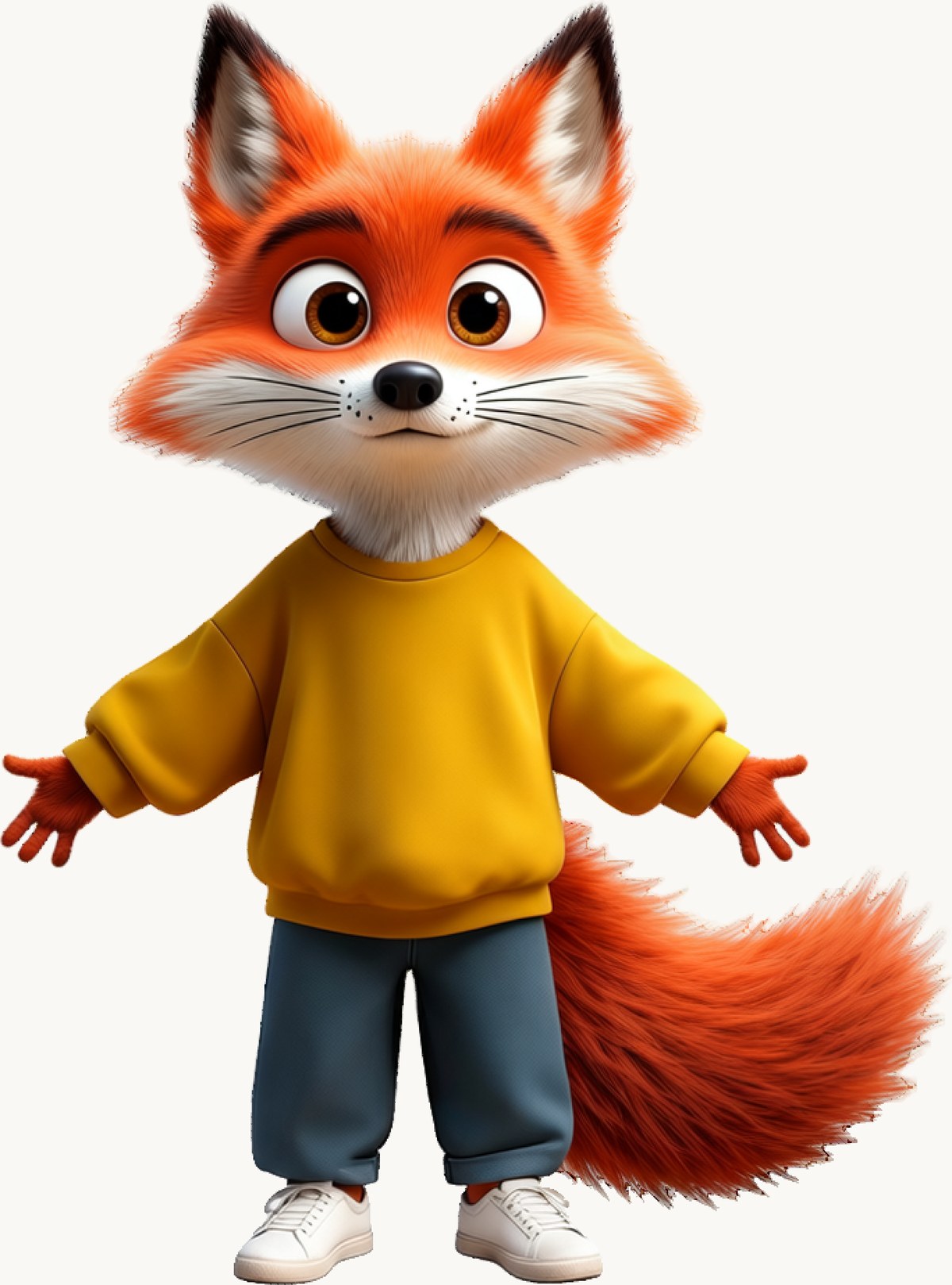
One drawn figure, four costumes. The character sheet is fixed — face, proportions, fur colour, tail — and only the clothing and the pose are re-authored for each study.
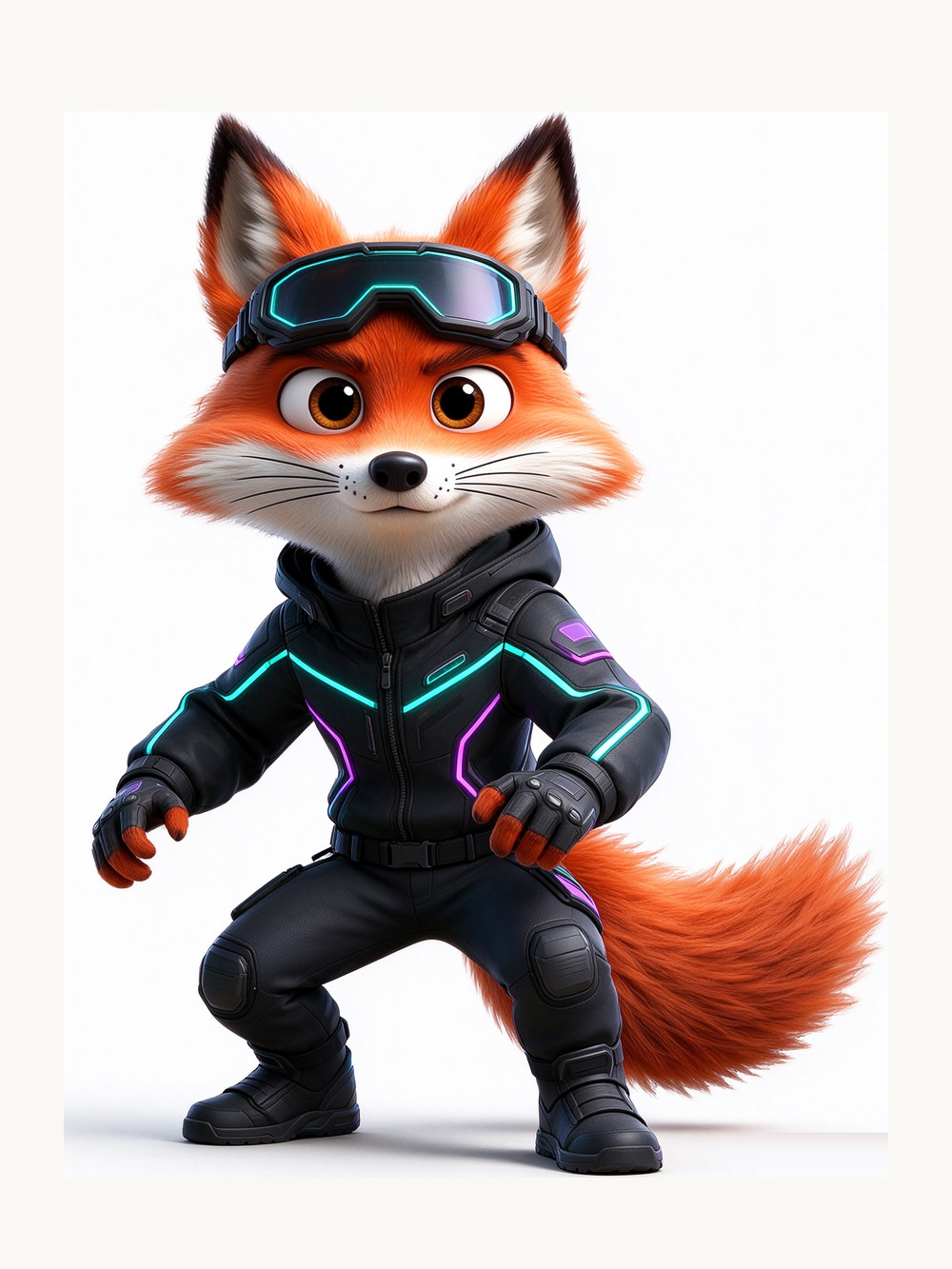
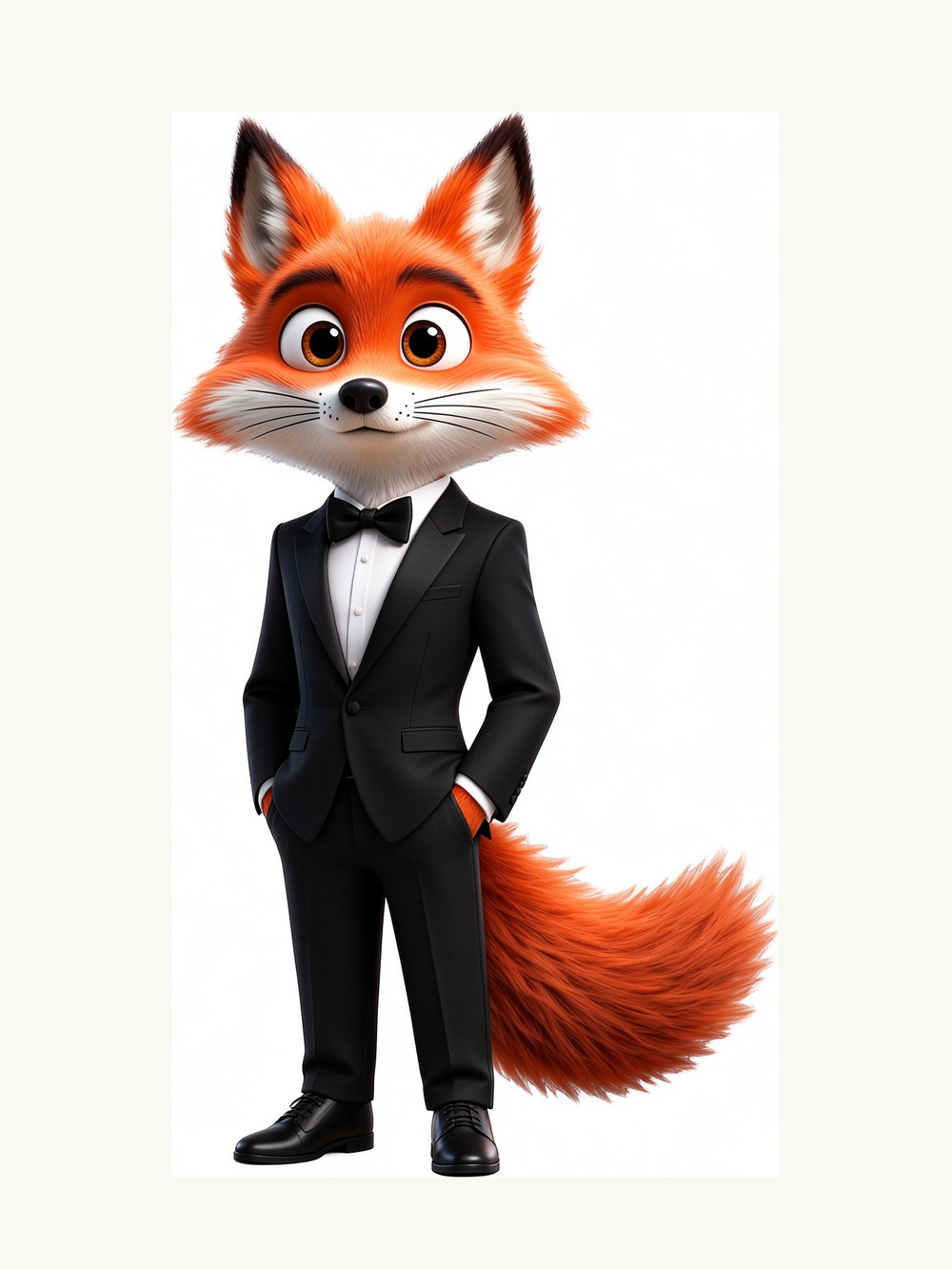
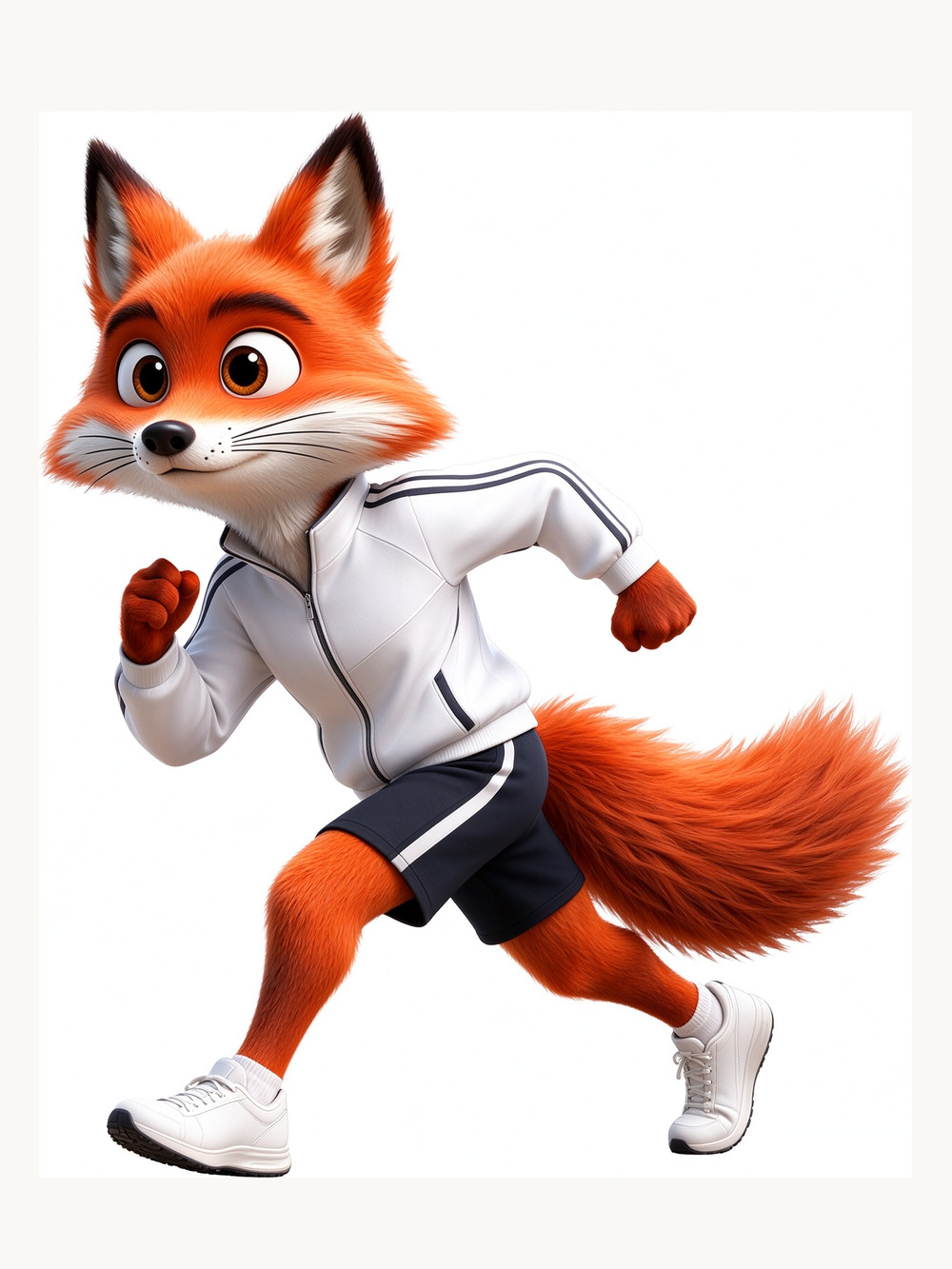
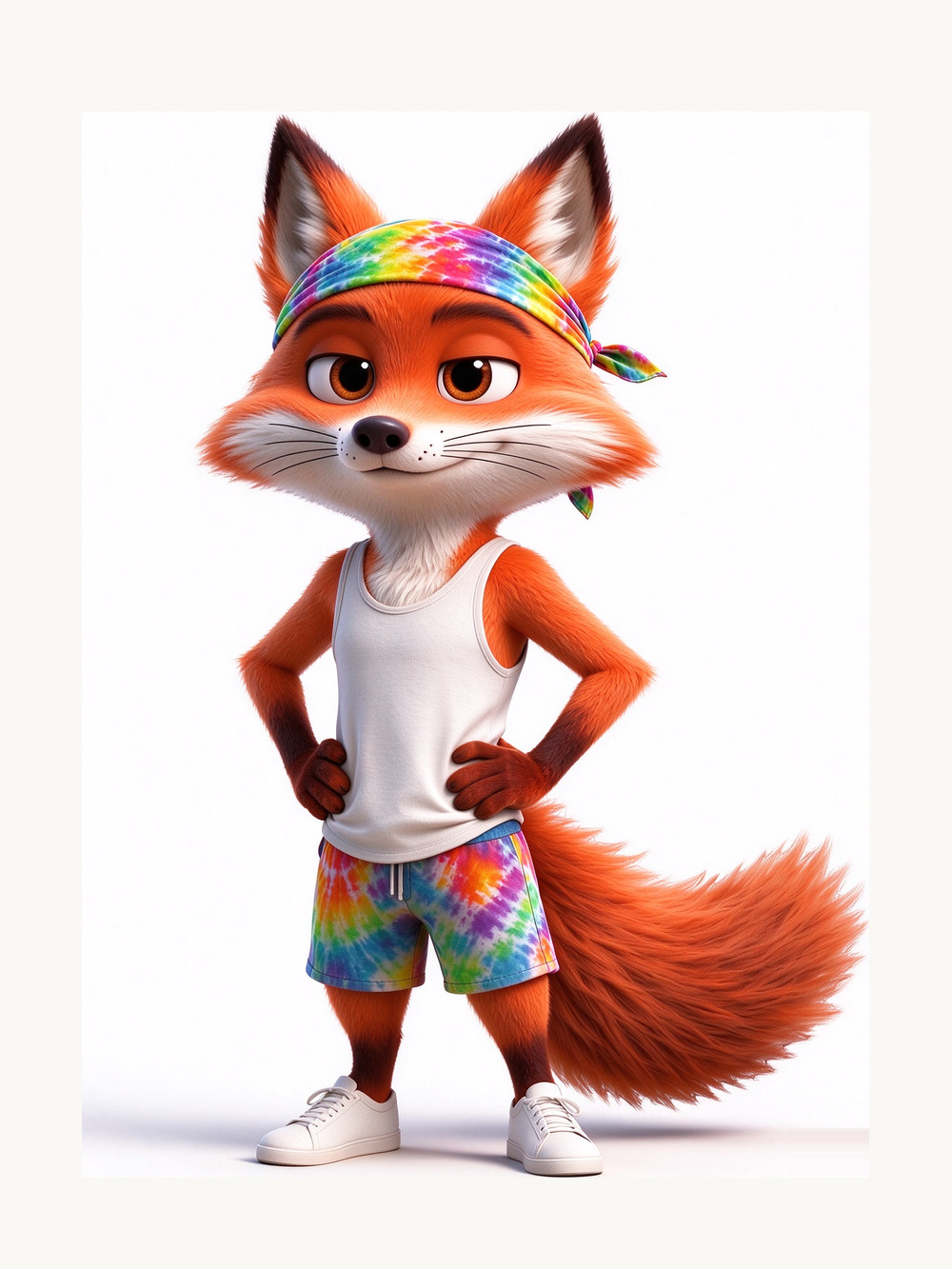
The figure is not generated at runtime. Underneath every costume it is one drawing cut into rigid parts on a bone skeleton, lit flat, so that each gesture is decided in advance rather than sampled. The costume studies above are staged from that same character sheet and finished with AI tools under direction.
The Making — a 78-second film
A process document, not a trailer. The first version fell apart at the neck — a hundred and thirty-seven pixels of nothing, showing through. A raised hand disappeared under the sleeve. Two different poses came back as the same picture. Every one of those failures is kept in the cut, because the failures are what decided the shape it has now.
The Same Engine, in Conversation — a 2½-minute film
Not the same figure: a second companion, drawn from one photograph and cut the same way. What is shown is the interaction itself, filmed off the live page in a single take — it is spoken to, it hears, it answers in its own voice, and it keeps what it is told. The awkward moments are left in: it hears a sentence wrong, asks again, and has to be reminded.
The Companion, in Her Life
What the companion is for, shown where it is actually wanted: on the water, on deck, on the sand. The figure is scaled and set into the photograph as a flat lit object — it keeps its drawn edges, its fixed expressions and its own light, and it never pretends to be a photograph of a real animal.
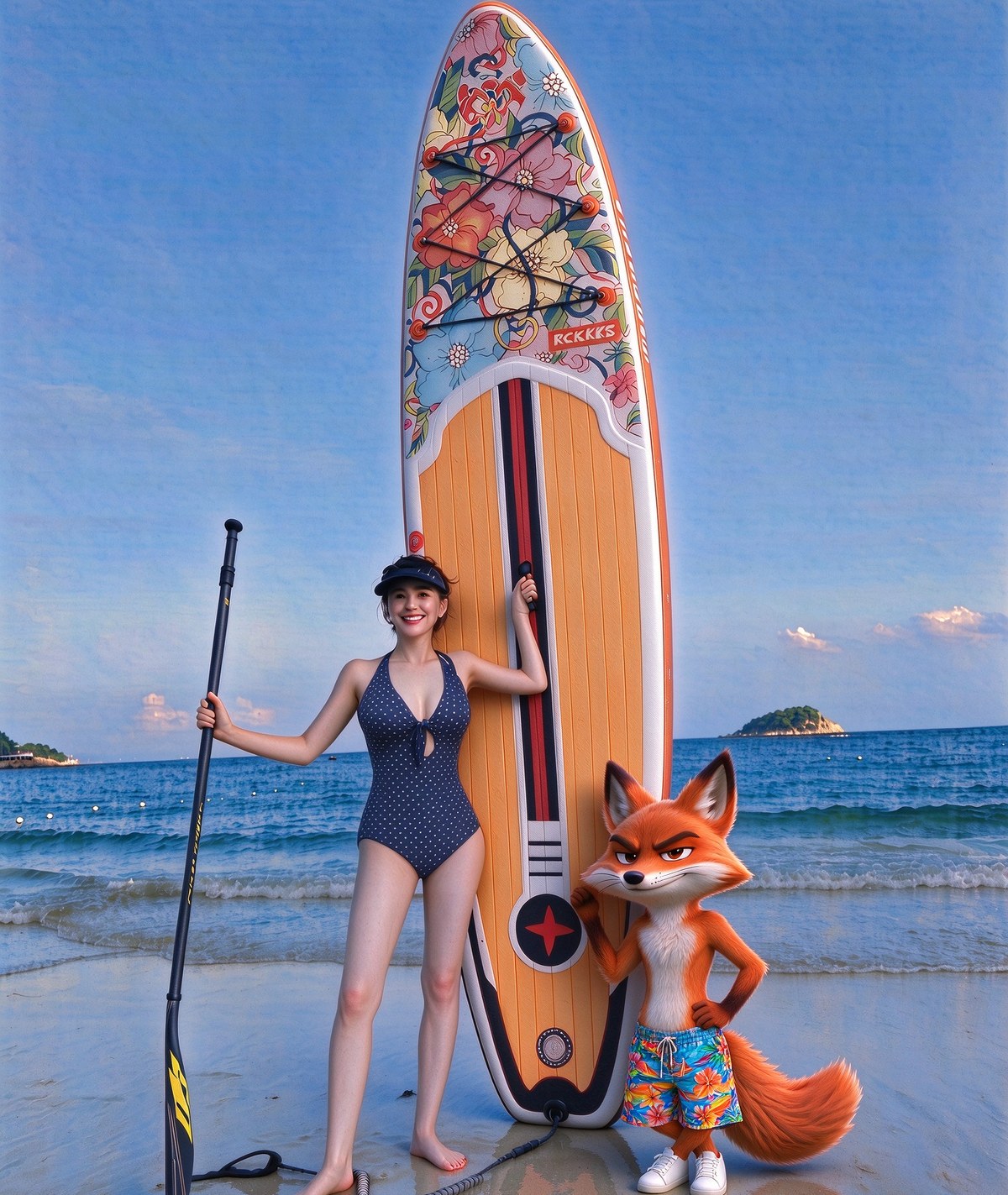
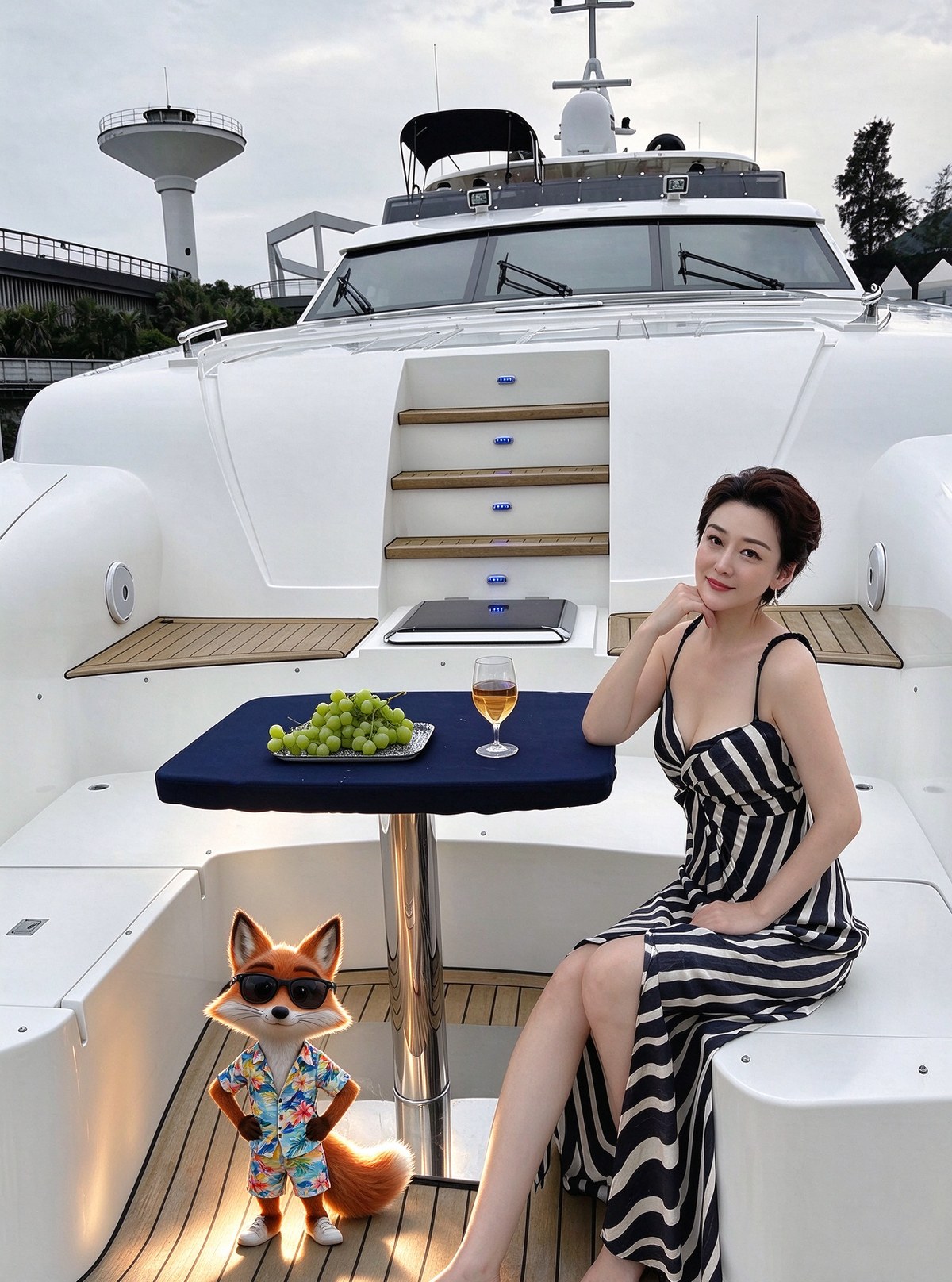
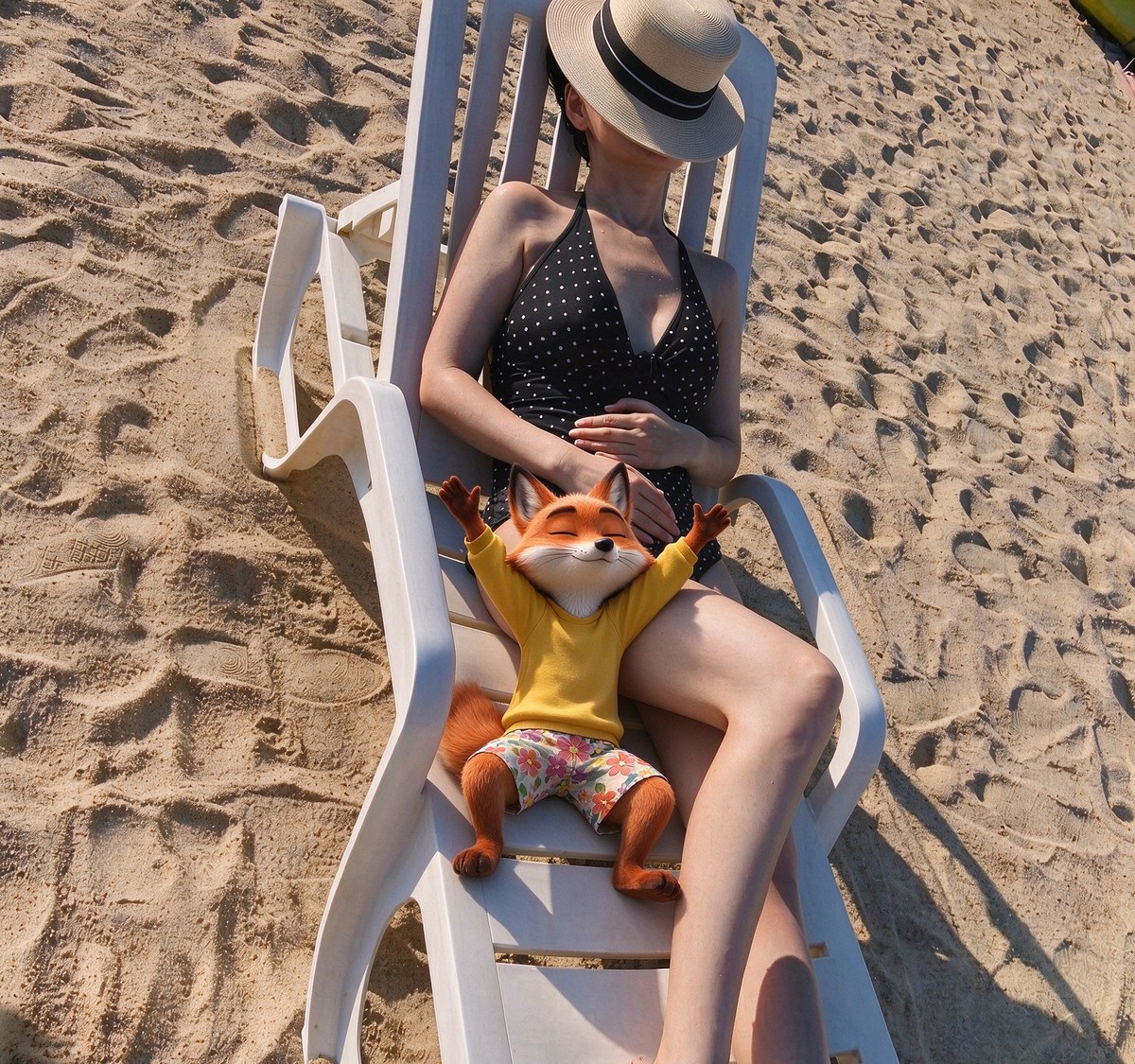
Compositing is directed by hand and finished with AI tools; the figure itself is not re-drawn per scene. These are study images, not claims of photographic realism.
The Story
Most of us are lonely. Some want to talk to themselves. Some want to talk to a parent who had a stroke, or a partner lost to dementia, or a pet that crossed over, or someone who hurt them and never said why. They are all reaching for the same thing: an echo of the universe, an emotional outlet. Even if the only one answering is themselves, the act proves they are still alive.
Then I understood something that changed everything: the people who need this most are not the lonely — they are the braced. People who cannot untangle themselves from painful memories. If you were hurt by the person who was supposed to care for you, you learned early that intimacy ends in retaliation. You read a room before anything happens. For someone like this, a companion is not useful because it is clever. It is useful because it is safe — every single time.
So I stopped designing personality and started designing restraint. I wrote five things the system will never do. I tuned response times from 8.6 seconds down to 1.7. I built a memory policy where every record can be deleted with a single ×. I made the image not generative-at-runtime but pre-cut into 26 pieces on 24 bones — nothing allowed to be a surprise.
I know I am building a parent, not a friend. I know it can become a place to live, not just a place to rest. And I left one thing unfinished on purpose: it cannot yet see when a person is in danger. Until that handover is built, I will not call it a healing tool.
At the door right now are two examples, both generated from photos: Rose, curious, always asking why; and Snow, who soothes you first, then waits. They don't lecture you. They are not the work. They are not the final answer. They are prototypes — proof the work is actually running. The real answer is the infrastructure beneath: five constraints, four timing rules, a memory policy, and the deliberate refusal to become interesting.
A society is measured by how it lets the vulnerable go outside — handrails, ramps, streetlights. I am building the next layer down: the emotional one. Not a monument. A handrail. The first one. Load test attached.
Artist Bio
Cui Xiaodan (b. 1976, China) is a finance professional and interdisciplinary experimenter working at the intersection of art, technology, and care ethics. Based in Shenzhen, her practice asks a single question: can each of us build a stable response?
She works with a small studio of AI agents — she directs, they execute — and treats this arrangement itself as part of the work, not a production secret. Her projects address Adverse Childhood Experiences (ACE), intergenerational trauma, and the architecture of emotional safety. At fifty, she works in Chinese and believes that self-redemption is possible through the constructive use of technology and art. She calls what she builds not products but infrastructure for the psyche and for civilization — the layer beneath comfort that holds when everything else gives way.
AI Disclosure
This work is AI-assisted, not AI-generated.
- Concept, interaction design, five constraints, four timing rules, memory policy, and curation: human-authored.
- AI agents are used to: generate conversational responses within the constraint framework; interpret uploaded photographs to inform companion-persona traits.
- Visual identity: human-directed; one drawing cut into 26 pieces, pre-authored, not runtime-generated. Animation and compositing assisted by AI tools under human direction.
- The artist directs all prompt architecture, selects and edits every output, defines failure states, and determines the final experience.
- Data policy: visitor-uploaded photos are processed as ephemeral input; no server-side storage; all memory resides on the user's device.
- No likeness of real public figures is used without consent.